


Security & baggage regulations
Security Check
Safety is the top priority in air travel. The aviation security framework has been revised several times by the European Commission and national authorities.
The brochure on airport security in Austria can be downloaded here.
Requirements according to EU Implementing Regulation 2015/1998
This Implementing Regulation of the European Commission sets out, among other things, the security requirements for passengers and their hand luggage, accompanying animals, and hold baggage.
Passengers and accompanying animals must undergo a security check before entering secure areas (gates, duty-free). During this security check, passengers, their hand luggage, and any accompanying animals are screened for prohibited items.
Security check for pacemakers & implants
Please inform the security staff if you have a pacemaker or nerve stimulator. In this case, you must not pass through the metal detector and will instead undergo a manual screening, including a pat-down and shoe check.
Passengers with implants, such as artificial hips or knees, may pass through the metal detector (which will always trigger an alarm) and will then be directed to a manual screening, including a pat-down and shoe check.

You can download the information on enhanced security checks here.
Since 1 September 2015, enhanced security regulations for explosive detection have applied at all European – and therefore also Austrian – commercial airports.
Passengers and their hand luggage may be randomly screened using special test strips for traces of explosives.
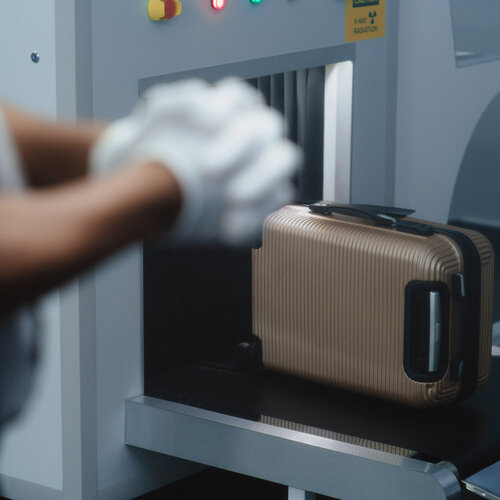
Hand luggage and carried items must undergo X-ray screening.
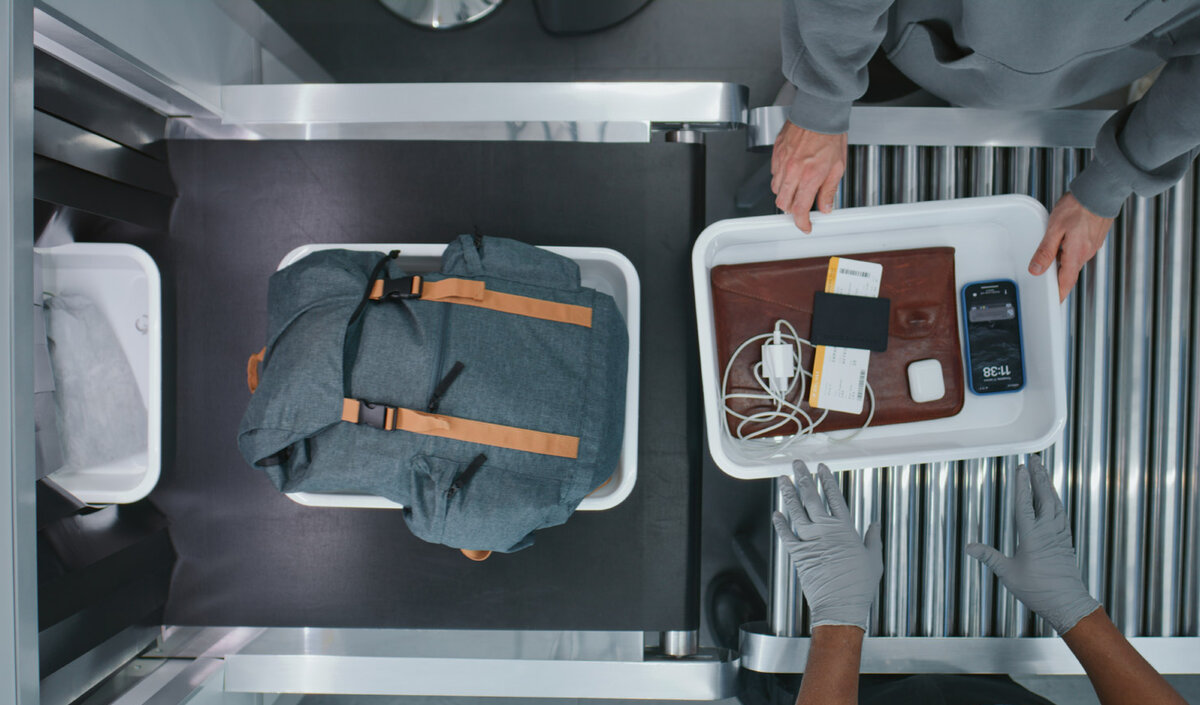
Electronic devices such as laptops and tablets, liquids in containers of max. 100 ml (transported in a resealable, transparent 1-liter bag), baby food, special dietary food, and medications must be presented separately to the security staff.
Please make sure to check the current security regulations and the list of prohibited items in hand luggage in advance. This list is illustrative – similar items that could cause injury or be used to damage the aircraft are also not allowed in hand luggage.
Liquid regulations
“Liquids” include liquids, aerosols, and gels. This also covers personal care products such as toothpaste, creams, lotions, hairspray, shaving foam, perfume, etc., as well as certain food items like jam, honey, and soft cheese.
Each passenger may carry liquids in containers of up to 100 milliliters, placed in a transparent, resealable 1-liter plastic bag that can still be closed easily.
Medications and special dietary foods, such as baby food needed for the duration of the journey, are also allowed. Proof of authenticity must be provided for these items (e.g., age verification for a child up to two years, or a doctor’s note or prescription for medications or dietary food). Medications, dietary, or baby food in containers larger than 100 ml will undergo additional security checks.
Duty-free purchases made worldwide or on board an aircraft must be transported in a sealed, tamper-evident bag and presented separately at security. The bag must clearly show proof of purchase from a duty-free shop or on board the aircraft.

Prohibited items
Even in checked baggage, the European Commission regulates the transport of certain items that, under specific conditions (e.g., pressure, temperature, or altitude changes), could cause serious damage to aircraft. Please familiarize yourself with the security regulations for prohibited items in checked baggage in advance. The list of prohibited items is illustrative.
The following items may not be carried by passengers in checked baggage:
Explosives and incendiary substances, as well as explosive or incendiary devices capable of causing serious injury or endangering the safety of the aircraft, including:
• Ammunition
• Detonators
• Fuses and primers
• Mines, grenades, or other military explosives
• Fireworks and other pyrotechnic devices
• Smoke canisters and smoke cartridges
• Dynamite, gunpowder, and plastic explosives